


Every week, business owners, manufacturers, and enterprise leaders look at their digital marketing dashboards with a mix of optimism and intense frustration. The metrics look exceptional. Traffic is climbing, cost-per-lead is dropping, and the inbox is filling up with new inquiry forms. Yet, when you look at the actual revenue pipeline, the reality is sobering. The inquiries lead to dead ends, the prospects lack the necessary budget, or the incoming requests are completely mismatched with your actual offerings.
If you run a business targeting a premium clientele, a B2B audience, or specialized niche buyers, this gap represents a massive drain on time and resources. It leads directly to a frustrated, foundational question that hundreds of founders type into search engines every day: Why am I getting leads but not sales, and how do you fix the quality gap?
The reality of high-end digital marketing is that broad visibility is relatively simple to achieve, but genuine trust is difficult to build. When digital campaigns are configured too widely, marketing systems naturally optimize for sheer volume – capturing users who love filling out forms but lack the deep purchasing power or immediate intent to close. To convert digital traffic into scalable revenue, a business infrastructure must transition from basic lead capture to rigorous, value-driven qualification.
The Content Disconnect: Moving Beyond Basic Visibility
When a business notices its sales pipeline stalling despite high inquiry volumes, a common mistake is attempting to solve the problem by blindly increasing ad spend or flooding channels with superficial, low-effort social media content.
As established in the recent strategic breakdown on Why Local Businesses in Mohali & Chandigarh are Invisible Online (And How to Fix It), achieving foundational visibility is merely the first step in establishing a true market footprint. However, basic visibility alone isn’t enough to drive real business growth. If brand messaging is too broad or a website feels like a generic template, it will inevitably attract low-intent traffic that consumes a sales team’s time without generating actual outcomes.
True lead qualification begins long before a prospect ever fills out a contact form. It requires an authoritative, asset-driven digital presence that demonstrates deep domain expertise. In the industry guide on How to do Branding in 2026: Future-Ready Strategies for Indian Businesses, the core emphasis was that building an unshakeable premium brand requires absolute depth and clear differentiation. When digital assets-like case studies, clean layout platforms, and leadership profiles-reflect true operational quality, they act as an automated filter that naturally repels low-budget inquiries while capturing high-value enterprise accounts.
Bridging the Gap: Real-World Conversion Architecture
Fixing a broken conversion funnel isn’t about aggressive selling; it is about building deep digital authority so that the right prospects pre-qualify themselves. Real-world experience shows that the shift from hollow leads to actual revenue always traces back to upgrading the structural design and intent of your public brand assets.
Consider how this friction-free qualification works in practice for a premium international surface brand like Nyra Germany. When introduced to a market, a high-end brand cannot rely on broad social media lead forms; doing so only invites low-intent inquiries that waste corporate resources. Instead, building a custom, responsive digital platform coupled with a highly targeted authority framework for leadership on networks like LinkedIn completely alters the acquisition dynamic. By documenting precision processes and speaking directly to specific B2B pain points, the brand positioning acts as an automated filter. Rather than collecting empty data points, this approach secures high-value enterprise connections and qualified corporate opportunities from absolute zero because the asset itself builds trust before a sales call ever occurs.

When digital assets communicate this level of operational depth, marketing stops functioning as a simple megaphone and begins operating as a strategic gatekeeper, protecting a sales pipeline from noise.
3 Structural Steps to Stop Wasting Resources and Start Closing Sales
If you are tired of seeing a high volume of inquiries that lead nowhere, you can systematically reverse the trend by deploying three structural adjustments to your digital pipeline:
1. Implement Friction-Based Lead Qualification
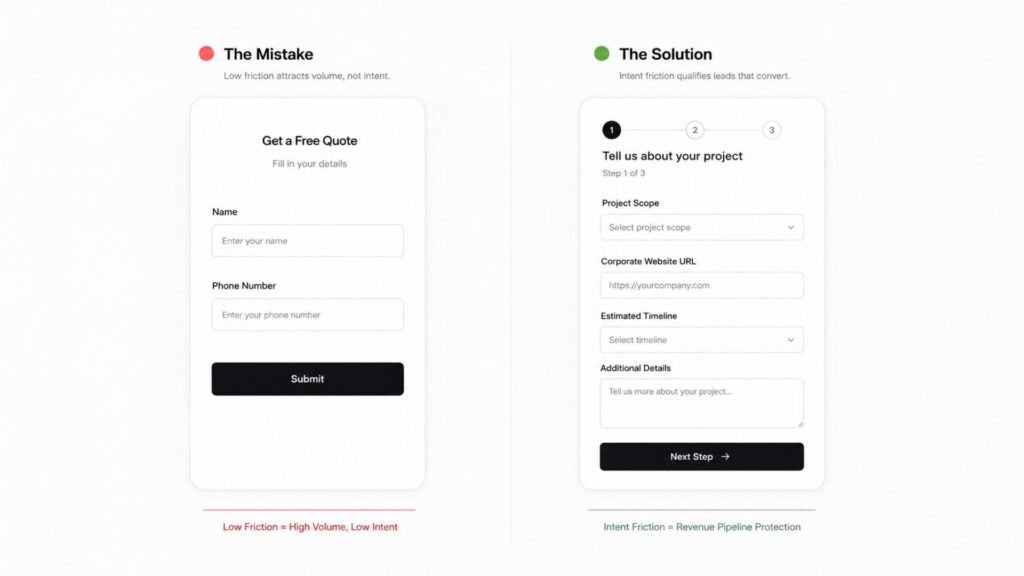
If a website contact form only asks for a name, email, and phone number, it makes it far too effortless for unqualified users to submit data. Introducing intentional friction by adding qualifying fields-asking for a corporate website, an estimated project scope, or a specific timeline-radically shifts lead dynamics. While this will lower overall inquiry volume, it guarantees that the data reaching the sales team consists of serious, verified buyers with real intent.
2. Align Ad Copy with Premium Landing Page Real Estate
A major driver behind high leads but low sales is message mismatch. If initial digital advertisements promise a premium, top-tier enterprise solution, but the destination landing page loads slowly, looks outdated, or lacks detailed proof of work, buyer trust vanishes instantly. Visual aesthetics, corporate copy, and value propositions must remain flawlessly aligned from the first click to the final form submission.
3. Deploy Hyper-Targeted, Intent-Driven Delivery
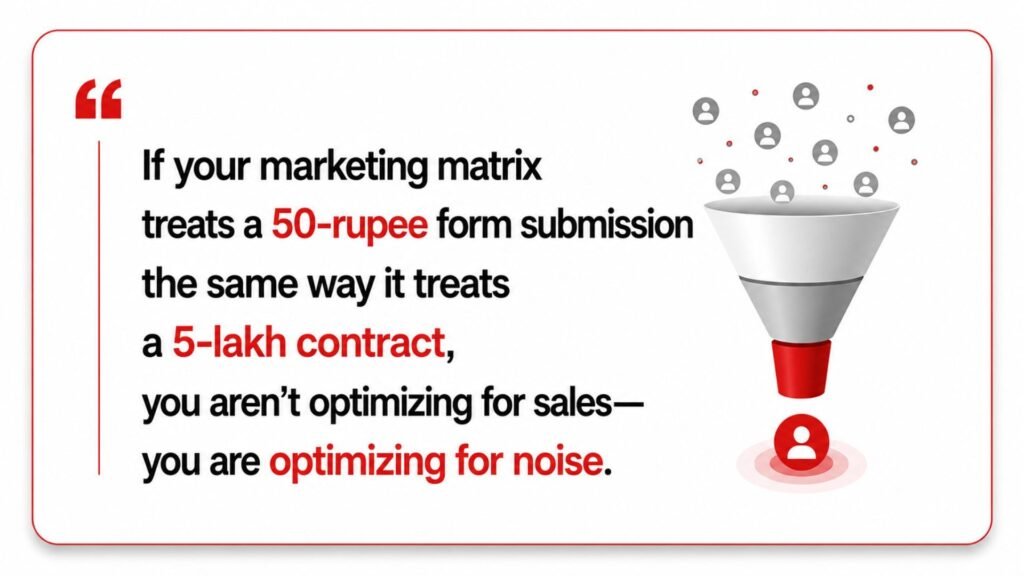
Stop targeting massive, unoptimized audiences with generic messaging. For high-ticket B2B services or premium goods, utilize hyper-targeted account-based marketing or narrow campaign focus to exact search intent keywords. Focusing budget entirely on specific industrial hubs, corporate decision-makers, and relevant socioeconomic regions ensures messaging is only served to organizations that can realistically align with your pricing structures.
Shifting Focus to Revenue Architecture
At the end of the day, digital marketing should be measured by the health of a business’s bottom line, not the cosmetic beauty of an ad dashboard. Bridging the conversion gap requires treating a digital footprint as an architectural system-one where content, design, and user psychology work together to protect a sales team’s time.
By building depth, auditing alignment, and daring to introduce qualification friction, a brand stops collecting empty data points and starts building a sustainable pipeline of genuine clients.