


When Nike launched their “Just Do It” campaign across social platforms, they didn’t just post random content and hope for the best. Behind their billion-dollar success lies a systematic social media marketing strategy that most brands never discover. The same framework that helped Nike, Apple, and Coca-Cola dominate social media is surprisingly simple-and you can start using it today.
Why Every Business Needs a Proven Social Media Strategy

Your social media strategy should align with your overall business goals, not exist in isolation. Brands that follow a structured approach see 300% higher engagement rates and generate 67% more leads than those posting without direction. This social media marketing strategy has helped brands generate millions in revenue by focusing on seven core elements that work together.
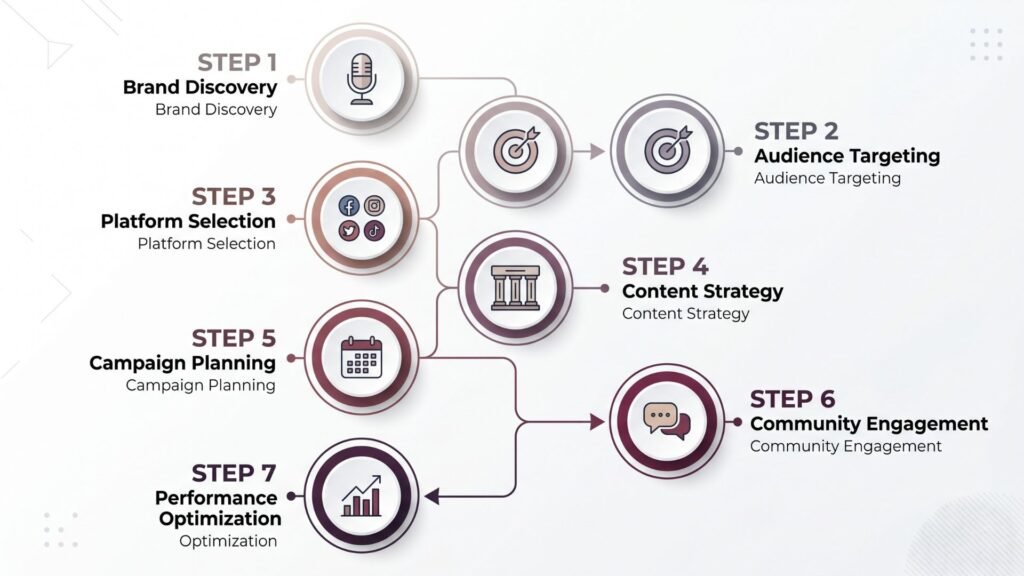
The Complete Social Media Marketing Framework Breakdown
This social media marketing framework has been tested by top brands across industries. Every element of this social media marketing framework builds on the previous step, creating a system that scales with your business growth.
Step 1: Define Your Brand Voice and Positioning
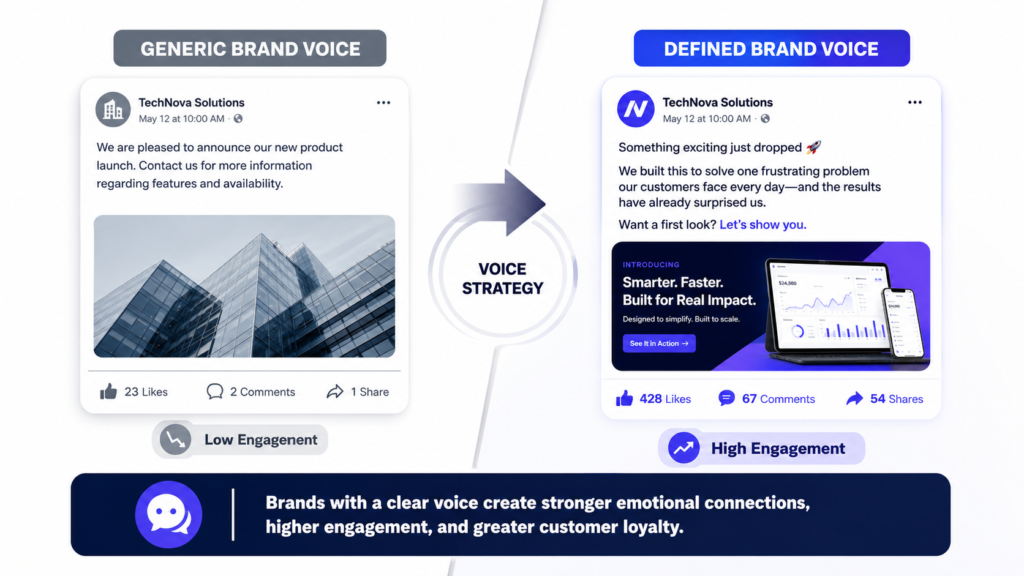
Start by establishing how your brand speaks and what makes you different. Wendy’s became famous for their witty, sometimes sarcastic voice that perfectly matched their target audience. Your brand voice should reflect your company values while resonating with your ideal customers.
Action Item: Write down three adjectives that describe your brand personality, then create content guidelines that reflect these traits.
Step 2: Research and Map Your Audience
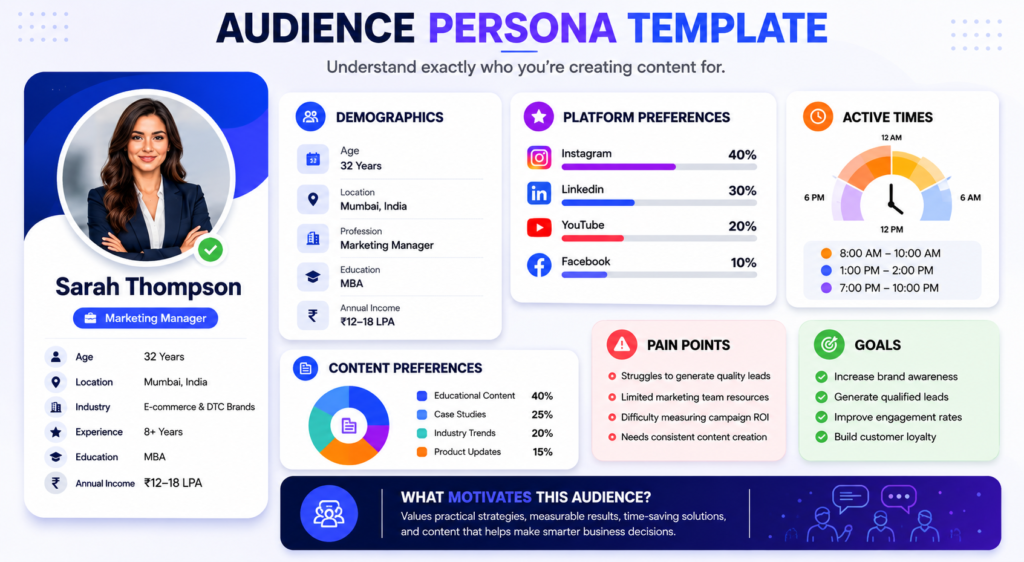
The best social media marketing strategy combines creativity with data-driven decisions about who you’re targeting. Use platform analytics to understand when your audience is most active, what content they engage with, and which platforms they prefer.
Action Item: Create detailed buyer personas for each platform, noting peak activity times and content preferences.
Step 3: Choose Your Platforms Strategically
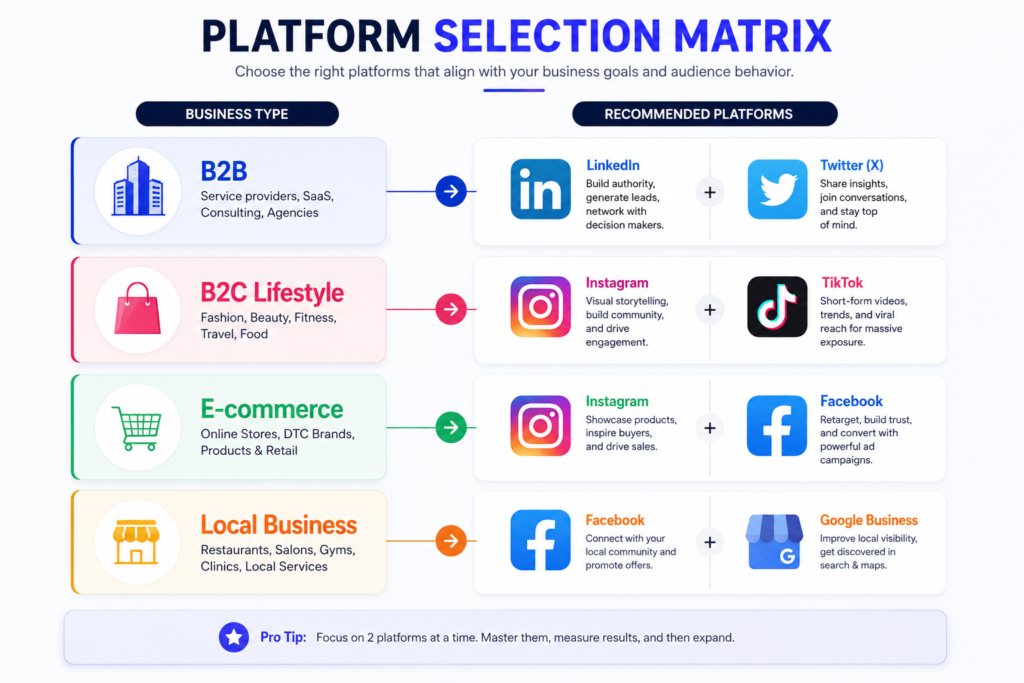
Don’t spread yourself thin across every platform. Focus on 2-3 platforms where your audience spends the most time. B2B companies often find success on LinkedIn and Twitter, while lifestyle brands thrive on Instagram and TikTok.
Action Item: Audit your current platform performance and double down on your top two performing channels.
Step 4: Develop Your Content Pillars
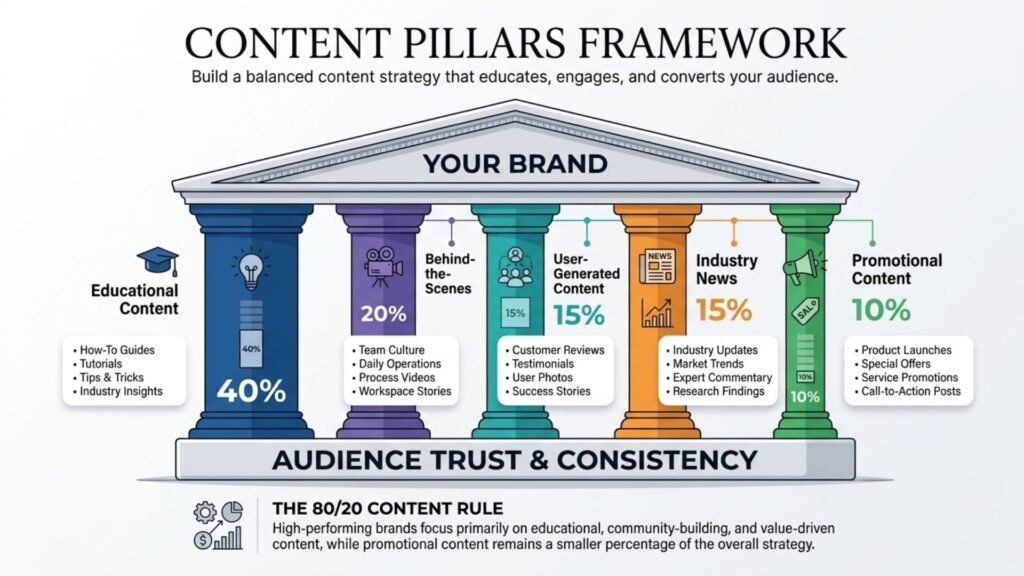
Every successful social media marketing strategy includes 4-5 content pillars that guide your posting. These might include educational content, behind-the-scenes glimpses, user-generated content, industry news, and promotional posts. The 80/20 rule applies-80% valuable content, 20% promotional.
Action Item: Define your content pillars and create a content calendar template that rotates through each pillar.
Step 5: Create a Consistent Posting Schedule
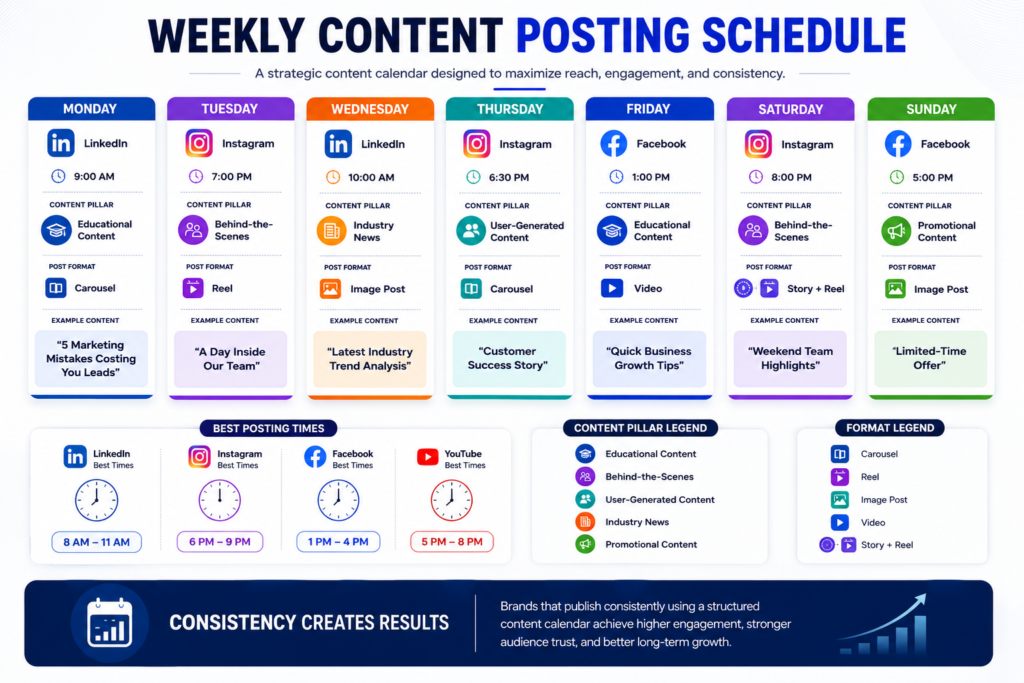
Consistency beats perfection every time. Brands that post regularly see 70% higher engagement than sporadic posters. Your social media marketing plan should include specific posting times and frequencies for each platform.
Action Item: Use scheduling tools to maintain consistency, even during busy periods.
Step 6: Engage Authentically with Your Community
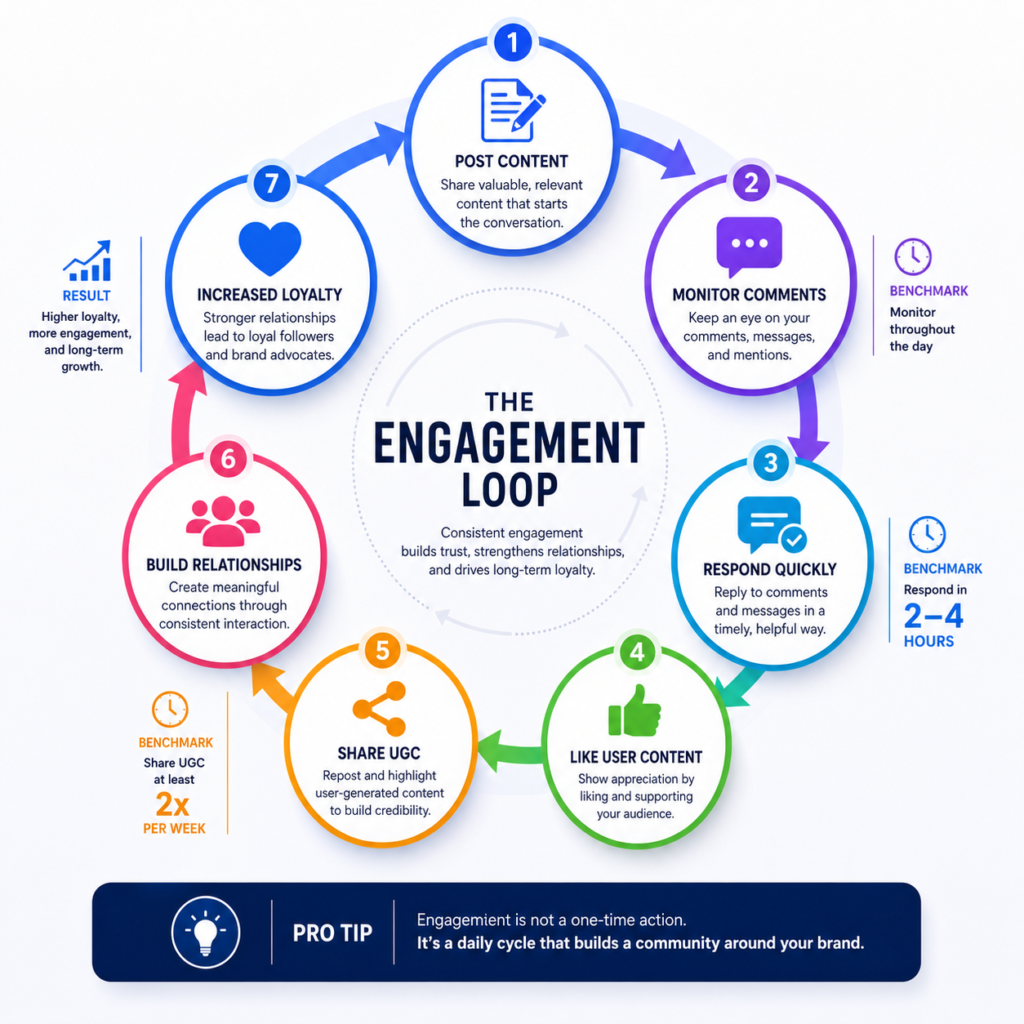
Social media is a two-way conversation. Respond to comments within 2-4 hours, join relevant conversations, and show genuine interest in your followers’ content. This builds the relationships that turn followers into customers.
Action Item: Set aside 30 minutes daily for community engagement and relationship building.
Step 7: Track Performance and Optimize

Monitor key metrics like engagement rate, reach, website clicks, and conversions. Use this data to refine your approach continuously. The most successful brands test different content types, posting times, and messaging to optimize their results.
Action Item: Review your analytics weekly and adjust your strategy based on what’s working best.
How to Build Your Social Media Marketing Plan Using This Framework
This social media marketing framework works for businesses of all sizes because it focuses on fundamentals rather than tactics that change with algorithm updates. Start with steps 1-3 to build your foundation, then implement steps 4-7 over the following month.
Remember, every successful social media marketing strategy starts with clear objectives. Whether you want to increase brand awareness, drive website traffic, or generate leads, having specific goals helps you measure success and make informed decisions about your content and engagement approach.