

A brand can work well for years, but as a business grows, its branding may no longer feel right. The audience may change, the business may expand, or it may simply start to look outdated. This is where rebranding and brand refresh come in. A rebrand involves bigger changes to a company’s identity and positioning, while a brand refresh focuses on updating an existing identity without losing its recognition.
Rebranding
Rebranding means making significant changes to an existing brand. This can include its logo, messaging, visual identity, positioning, or even its name.The goal is to create a brand that better reflects the company’s current direction.
When to Choose Rebranding?
Rebranding may be the right choice when:
- Your business has changed direction.
- Your target audience has changed.
- Your current positioning no longer works.
- You are entering a new market.
- Your brand looks too similar to competitors.
- Your company has merged with another business.
- Your current identity no longer represents your goals.
Corporate Example: Dunkin
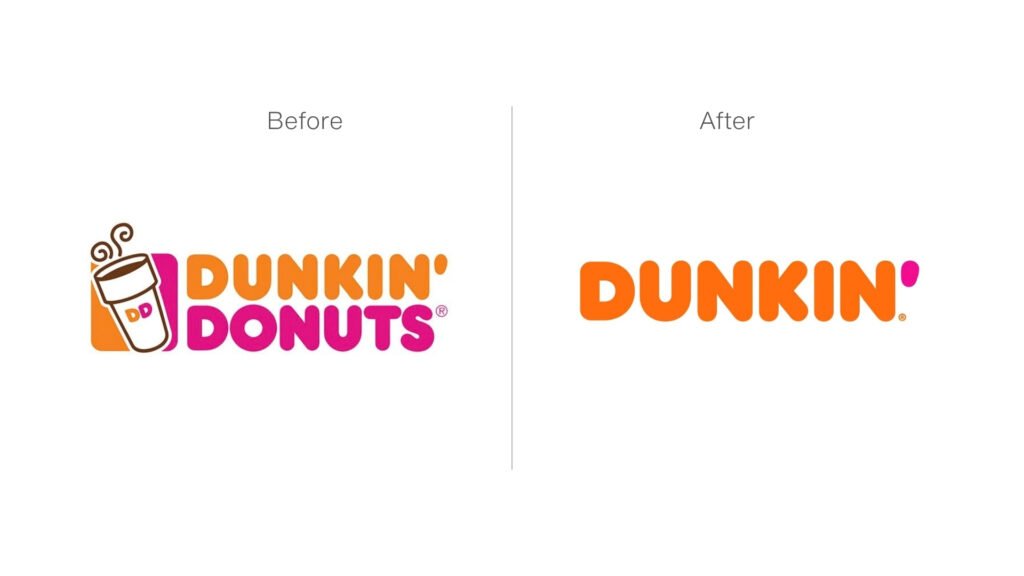
Dunkin’ is a good example of rebranding to reflect a wider business direction.
In 2018, Dunkin Donuts dropped “Donuts” from its name and became simply ‘Dunkin’ The change reflected the company’s broader focus on coffee and other food and beverage products.It shows how rebranding can help a company communicate a change in how it wants to be perceived.
Brand Refresh
A brand refresh is a lighter update to an existing brand. Instead of changing the foundation, a company improves elements such as its logo, colors, typography, website, or messaging.The goal is to make the brand feel more modern while keeping it recognizable.
When to Choose a Brand Refresh?
You should choose Brand Refresh when:
- Customers already recognize your brand.
- Your positioning is still working.
- Your visual identity looks outdated.
- Your website needs an update.
- Your marketing materials lack consistency.
- Your messaging needs some improvement.
- You want to modernize without starting over.
Corporate Example: Starbucks
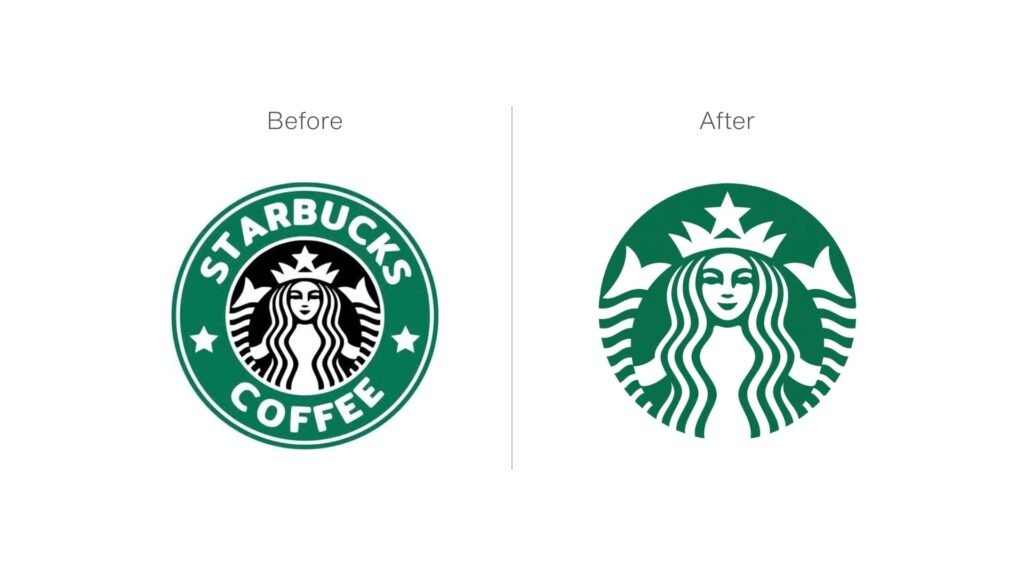
Starbucks has evolved its visual identity several times without completely abandoning its recognizable brand. In 2011, Starbucks simplified its logo by removing the words and outer ring, leaving the familiar siren symbol.
The update gave the brand a cleaner look while keeping an element customers already recognized.
Key Differences
| Factor | Rebranding | Brand Refresh |
|---|---|---|
| Main goal | Redefine the brand | Update the existing brand |
| Scope | Broad | More focused |
| Identity | May change significantly | Usually stays recognizable |
| Logo | May be redesigned | Often refined |
| Messaging | May change substantially | Usually adjusted |
| Positioning | Can change | Usually stays the same |
| Target audience | May change | Usually remains the same |
| Investment | Usually higher | Generally lower |
In simple terms, “rebranding changes the foundation of a brand, while a refresh improves how that foundation is presented.”
Which One Is Right for Your Company?
The right choice depends on what your business actually needs.
If your company is changing its direction, audience, market, or positioning, rebranding may be appropriate.
If the business is still heading in the same direction but the brand looks outdated, a brand refresh may be enough.
Ask yourself: Does the brand need to change, or does it simply need an update?
If the foundation needs to change, consider rebranding. If the foundation is strong but the presentation needs improvement, a refresh may be the better approach.
Final Thoughts
Rebranding and brand refresh solve different problems.
A rebrand creates a more significant change in a company’s identity and positioning. A refresh keeps the core brand intact while making it feel more modern and consistent.
Before making a decision, look at your business goals, audience, and current brand. Once you understand what actually needs to change, choosing between a rebrand and a refresh becomes much easier.