

Every single day, thousands of aspiring entrepreneurs open a blank document, type out a business idea, and ask themselves the ultimate question: “How do I actually start a successful startup from scratch?”
If you are staring at an idea notebook or looking for a predictable roadmap to launch a company, you are not alone. Building a business in 2026 is entirely different from how it was done a decade ago. Thanks to the rise of advanced AI tools, lean cloud infrastructure, and global remote talent, launching a product has never been faster or cheaper.
However, speed does not guarantee survival. The global startup failure rate still hovers near 90%, and the reason hasn’t changed: founders building products nobody actually wants.
If you want to skip the expensive mistakes and build a sustainable, revenue-generating venture, here is the battle-tested, step-by-step playbook to starting a startup.
Step 1: Solve a Real Problem (Instead of Falling in Love with an Idea)
The biggest trap for first-time founders is starting with a cool product concept instead of a painful problem.
Successful startups do not begin with “What should I build?” They begin with: “What problem do I understand better than most people?”
• The best ideas come from lived experience, frustrations you’ve personally faced in your career, operational bottlenecks you’ve watched waste money, or gaps in your industry.
• Before writing a single line of code or designing a logo, talk to 20 to 30 potential customers. Ask them about their current workflows, what solutions they currently pay for, and where their biggest headaches lie.
• If people aren’t already actively trying to fix or hack around the problem, it’s probably not painful enough to build a company around.
Step 2: Validate Demand Before You Build Anything

Validation is the cheapest insurance policy a founder can buy. Too many entrepreneurs spend months building an elaborate product in secret, only to launch it to absolute silence.
To properly validate your idea:
1. Conduct 30 Discovery Conversations: Interview target buyers to confirm that the pain point is universal and urgent.
2. Set Up a Validation Landing Page: Build a simple, clean landing page explaining your solution with a clear call-to-action (like joining a waitlist or pre-ordering).
3. Measure Intent: If users are willing to give you their email or open their wallets for a pre-order, you have a green light. If they offer polite praise (“That sounds like a cool idea!”) but won’t commit, go back to the drawing board.
As we often emphasize in our digital growth breakdowns on topics like Why is My Digital Marketing Strategy Not Working?, alignment between what the market wants and what you offer dictates your entire trajectory.
Step 3: Build a Lean Minimum Viable Product (MVP)
In 2026, you don’t need a massive tech stack or a 10-person engineering team to launch.
Your MVP should be the simplest, most stripped-down version of your product that still delivers core value to your user. Use no-code platforms, modular software tools, and existing cloud infrastructure to get your product into the market within weeks.
• Focus on Core Utility: If your app or service solves one major problem exceptionally well, users will forgive minor rough edges.
• Keep Burn Rate Low: Conserving your initial capital allows you to pivot and iterate without running out of cash during the first six months.
Step 4: Fix Your Funnel and Customer Acquisition Early
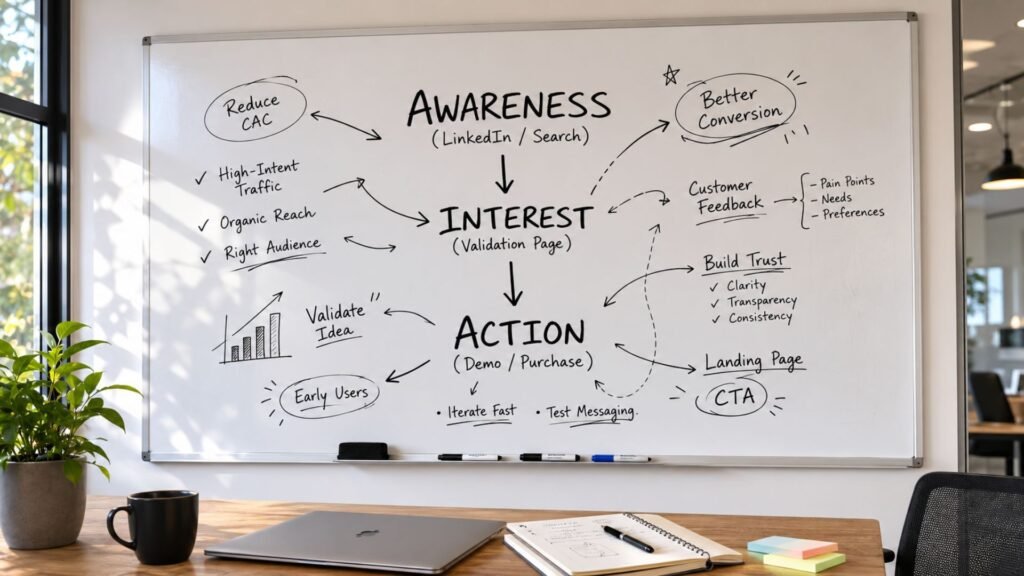
A common startup myth is that “if you build it, they will come.” In reality, even the best product will fail if your customer acquisition engine is broken.
When you start acquiring users, pay close attention to your unit economics:
• Track Your Customer Acquisition Cost (CAC): As we outlined in our deep-dive on What is the Cost Per Acquisition (CPA), and How Can Indian Businesses Lower It?, spending more to acquire a customer than they are worth in lifetime value will bleed your startup dry.
• Blend Paid and Organic Channels: Do not rely solely on expensive ad auctions. Combine precision performance marketing with organic authority-building, such as founder-led content on LinkedIn and optimized search presence, to lower your blended acquisition costs.
To see how real brands structure their digital funnels and acquire high-intent users efficiently, you can explore the case studies on our Merkri Media Portfolio.
Step 5: Secure Your Legal and Operational Foundations
Founders often want to skip the boring operational setup, but neglecting legal basics creates massive vulnerabilities later.
• Incorporate Correctly: Choose a business structure (such as a Sole Proprietorship, LLP, or Private Limited/Corporation depending on your region and funding goals) that protects your personal assets.
• Draft Co-Founder Agreements: If you have partners, sign formal equity vesting agreements early. Clear terms prevent catastrophic disputes down the road.
• Keep Financial Discipline: Track every single expense from day one. Understand your cash runway and manage your burn rate meticulously.
Launch, Learn, and Iterate
Starting a startup is not a single event; it is a continuous cycle of listening to the market, fixing leaks in your conversion funnels, and improving your product based on hard data rather than assumptions. Stay close to your early users, obsess over their feedback, and build a brand that is impossible to ignore.
Ready to scale your startup’s digital presence and customer acquisition? Reach out to the Merkri Media team today to discuss how we can build a high-performance marketing engine for your brand.